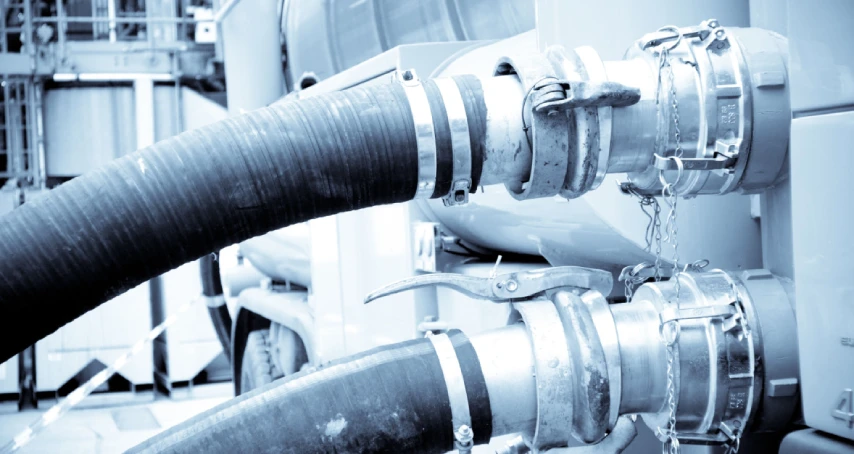
LetoneTechnology's chemical transfer hose, widely used in the chemical, steel, construction, food, and pharmaceutical industries, is suitable for transporting a variety of corrosive substances such as acidic and alkaline solvents. Its superior corrosion resistance makes it a top choice for industries such as petrochemicals and hazardous liquid transportation.
Features and Description
Widely used in the chemical industry, this product is suitable for working environments with strong acids and bases. Its superior corrosion resistance makes it immune to a variety of corrosive liquid chemicals (sulfuric acid, hydrochloric acid, sulfur reactants, etc.), making it an excellent choice for pipelines used in the chemical industry.
Widely used in the food industry, this product is suitable for high-temperature working environments. Its superior high-temperature resistance allows this product to operate normally under high-temperature conditions, making it an excellent choice for pipelines used in the food industry.
Widely used in the pharmaceutical industry, this product is suitable for working environments with strong acids and bases. Its superior corrosion resistance makes it resistant to a variety of corrosive liquid chemicals (sulfuric acid, hydrochloric acid, sulfur reactants, etc.), making it an excellent choice for pipes used in the pharmaceutical industry.
Widely used in the steel smelting industry, this product is suitable for high-temperature working environments. Its superior high-temperature resistance allows it to operate normally under high-temperature conditions, making it an excellent choice for pipes used in steel mills, foundries, and other high-temperature industries.
Frequently Asked Questions
Can concrete conveying hoses be used with acids?
Concrete conveying hoses are used to convey concrete in construction machinery, such as concrete pump trucks, mortar sprayers, and other construction equipment. Their superior wear resistance extends their service life several times compared to conventional concrete conveying pipes. This product protects against acids in concrete. The pipe body is made of synthetic rubber UPE and SBR&NR. While conventional pipes use UPE material with an average molecular weight in China, the UPE material used in this pipe is imported from Germany, with a molecular density approximately 5 million times higher than domestic UPE material, resulting in exceptional chemical stability and superior wear resistance.
What materials are commonly used to make chemical pipes?
Deviating from industry norms, Letone Technology's R&D team has developed King Hose, a multi-functional PTFE hose for chemical hoses. This hose uses PTFE (also known as polytetrachloroethylene), a high-molecular-weight polymer nicknamed the "King of Plastics," as its inner lining material. Its excellent chemical stability, corrosion resistance, high and low temperature resistance, electrical insulation, and non-stick surface have solved many problems in the petroleum, chemical, power, and pharmaceutical industries. The combination of PTFE and rubber hoses allows them to transport strong oxidants, reducing agents, strong acids, and various organic solvents (except molten metals, fluorinated media, and sodium hydroxide above 220°C) under high temperatures and pressures. This hose is widely used in the petroleum, chemical, energy, construction, steel, machinery, food, and pharmaceutical industries, making it truly "versatile."
What temperature can the high-temperature resistant pipe withstand?
What temperature can the high-temperature resistant pipe withstand? The LT1212150PSI cold-resistant corrugated oil suction and discharge pipe can be customized according to customer requirements, generally up to 4 feet. The inner rubber of this pipe has a certain conductivity and is black. The pipe's nominal pressure is 1500SI, and the minimum temperature can reach -54 degrees Celsius. Even at low temperatures, this pipe is highly flexible. The outer layer is made of blue corrugated rubber, which has wear-resistant and oxidation-resistant properties, thereby increasing the pipe's service life.